
Dengue fever can sometimes appear like an ordinary viral fever in the beginning. This case highlights why early investigation and close monitoring of platelet counts are important when a patient develops persistent fatigue and other symptoms.
A 42-Year-Old Man With High Fever and Severe Fatigue
A 42-year-old male patient presented with an acute viral-fever-like illness.
His initial symptoms included:
Difficulty sleeping/insomnia
Fever around 103°F
Severe headache
Extreme tiredness and weakLoss of taste
At the initial consultation, the clinical picture appeared consistent with an acute viral febrile illness. Symptomatic treatment was started, including a homeopathic regimen consisting of Belladonna 1M, Bryonia 200 and Veratrum viride 3X.
Over the following two days, the patient’s fever and headache improved considerably. However, his marked tiredness, loss of taste and insomnia continued.
Because the symptoms persisted despite improvement in fever, I advised a complete blood count.
The CBC Revealed a Critical Finding
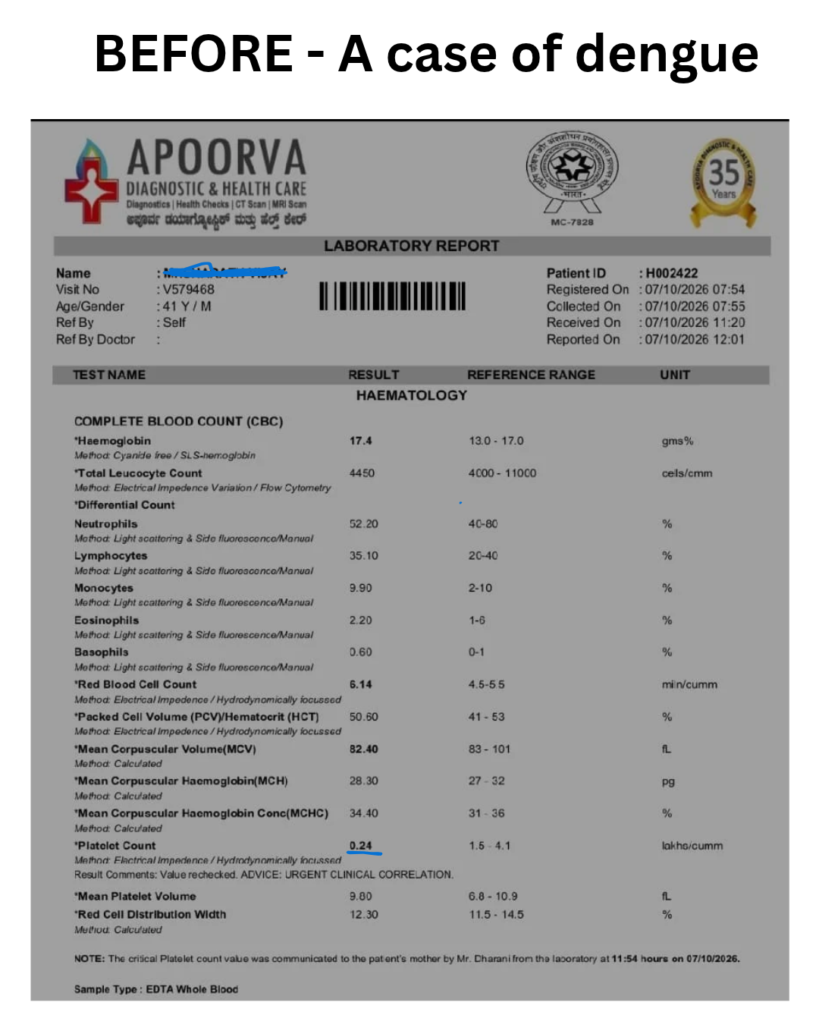
The first CBC showed several noteworthy findings.
The most important result was the platelet count: 24,000/µL (0.24 lakh/cumm).
For comparison, the laboratory reference range was 1.5–4.1 lakh/cumm.
The report also showed:
- Hemoglobin: 17.4 g/dL
- Total leukocyte count: 4,450/cumm
- RBC count: 6.14 million/cumm
- Hematocrit: 50.6%
- MCV: 82.4 fL
The laboratory specifically flagged the platelet result as critical and advised urgent clinical correlation.
A platelet count of 24,000 in a patient with suspected dengue requires careful clinical assessment rather than simply focusing on the number. Dengue patients need monitoring for bleeding, fluid leakage, changes in hematocrit, blood pressure, urine output and other warning signs
Dengue Testing Confirmed the Diagnosis
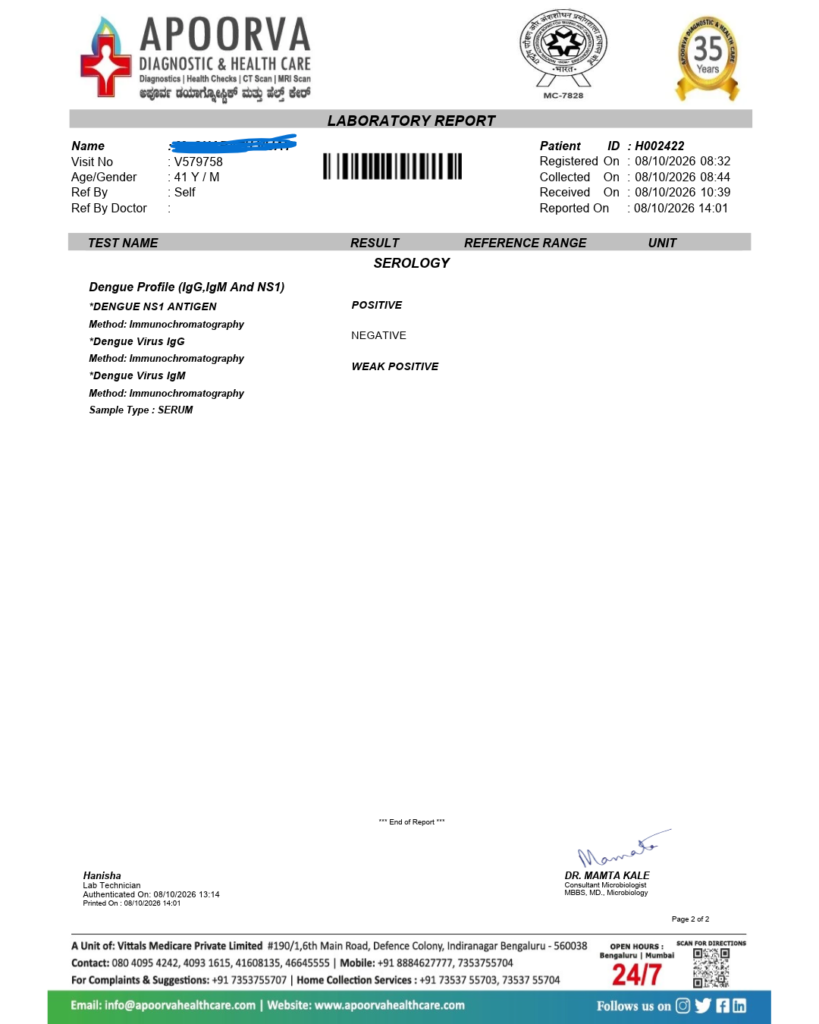
A dengue profile was subsequently performed.
The results were:
| Test | Result |
|---|---|
| Dengue NS1 antigen | Positive |
| Dengue IgG | Negative |
| Dengue IgM | Weak positive |
The combination of the clinical presentation and positive dengue testing supported acute dengue infection.This was an important turning point in the case because dengue can initially resemble an uncomplicated viral fever. The more dangerous phase can occur around the time the fever begins to settle, so improvement in temperature alone does not necessarily mean that the patient is out of danger.
Platelets Increased From 24,000 to 56,000
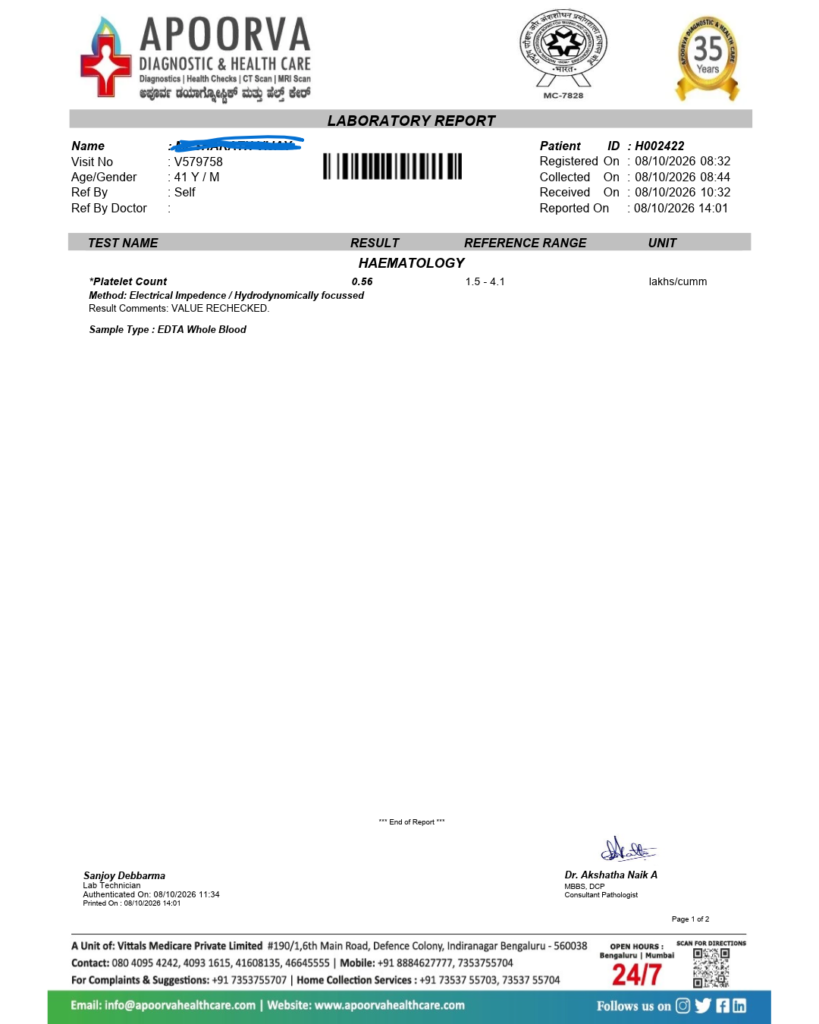
The CBC was repeated approximately 24 hours later.
Interestingly, the platelet count had increased from:
24,000 → 56,000/µL
This was a significant improvement in the laboratory value over a short period.
At this stage, I continued the patient’s existing complementary/homeopathic treatment approach and added Thuja 200, X-ray 30 and Carica papaya Q, while continuing close observation.
For the persistent sleep disturbance, Passiflora and the patient’s prescribed tranquillizing preparation were used at bedtime.
Why Platelet Monitoring Matters in Dengue
Patients should also be monitored for:
Fluid accumulation
Abdominal pain or tenderness
Persistent vomiting
Bleeding from the nose or gums
Blood in vomit or stool
Increasing weakness or restlessness
Difficulty breathing
Reduced urine output
Low blood pressure or signs of shock
Rising hematocrit
Final Thoughts
Ease homeopathy clinic has being successfully treating dengue cases in its acute as well as in post viral complications like that of weakness, insomnia, lasting post viral body pains , digestion issues, after the viral attacks. we were being giving medicines to improve the platelets count especially in dengue fevers and has being very effective so far. we can see the changes happening within 24 hours after the medication. the dosage, repetition and medicine depends on case to case basis.. please contact professional or reach out to us for further details .. thank you Dr Sreechithra BHMS, MSc psycology , Ease Homeopathy